
Albert Chong has taught on the faculty of CU Boulder since 1991. Born in Jamaica in 1958 of Afro-Chinese ancestry, he began his photographic career in New York City in the late 1970s. After a short period working in the classic street photographer mode, he reversed course to create what he called “I-Traits”— studio self-portraits that fuse mysticism, iconography, Rastafarian shamanism, family portraits, and transnational culture (1979–85). Chong describes Natural Mystic (above) as his first signature image from that period. The image initiates his use of vegetation (often a small spindly tree), burlap (as a reminder of sugar sacks that held the sugar sold in his family shop), and other vernacular props he assembled to represent elements of his personal mythology.
In 1983, the influential photo curator Deborah Willis of the Schomberg Center in New York included him in 14 Photographers, his first nationally significant exhibition and the first of several important shows curated by Willis that included his work. Beginning in the late 1980s, while studying for an MFA at UC San Diego, Chong began to extend the meaning and narrative of his photo constructions by adding broad copper frames inscribed by hand with words, motifs, and drawings, etc. Color was introduced with images such as Aunt Winnie (1995), for which Chong overlayed his aunt’s black-and-white portrait with an arrangement of purple and yellow flowers; the resulting photomontage is one of a series of tributes to relatives and friends that continued through 2015.
In recent years, Chong has experimented with sculptural constructions and composite imagery using substrates such as wood, marble, or ceramic tiling. At the time of writing (March 2026), he is the subject of a retrospective exhibition at the Emmanuel Gallery in Denver; concurrently, he is exhibiting a series of Polaroid portraits he made in Jamaica in the mid-1990s at the East Window artspace in Boulder. Notably, he is also represented by an early I-Trait titled Self-Portrait with Eggs (1985), in the touring exhibit Photography and the Black Arts Movement 1955–1985 at the J. Paul Getty Museum in Los Angeles. Several of his works are also included in an exhibition titled "Letters to Memory," curated by Yudi Rafael at SESC Avenida Paulista in São Paulo, Brazil from November 13, 2025 to May 3, 2026.
This following exchange is edited from interviews recorded at Albert Chong’s home in Boulder, December 2018 and January 2026.
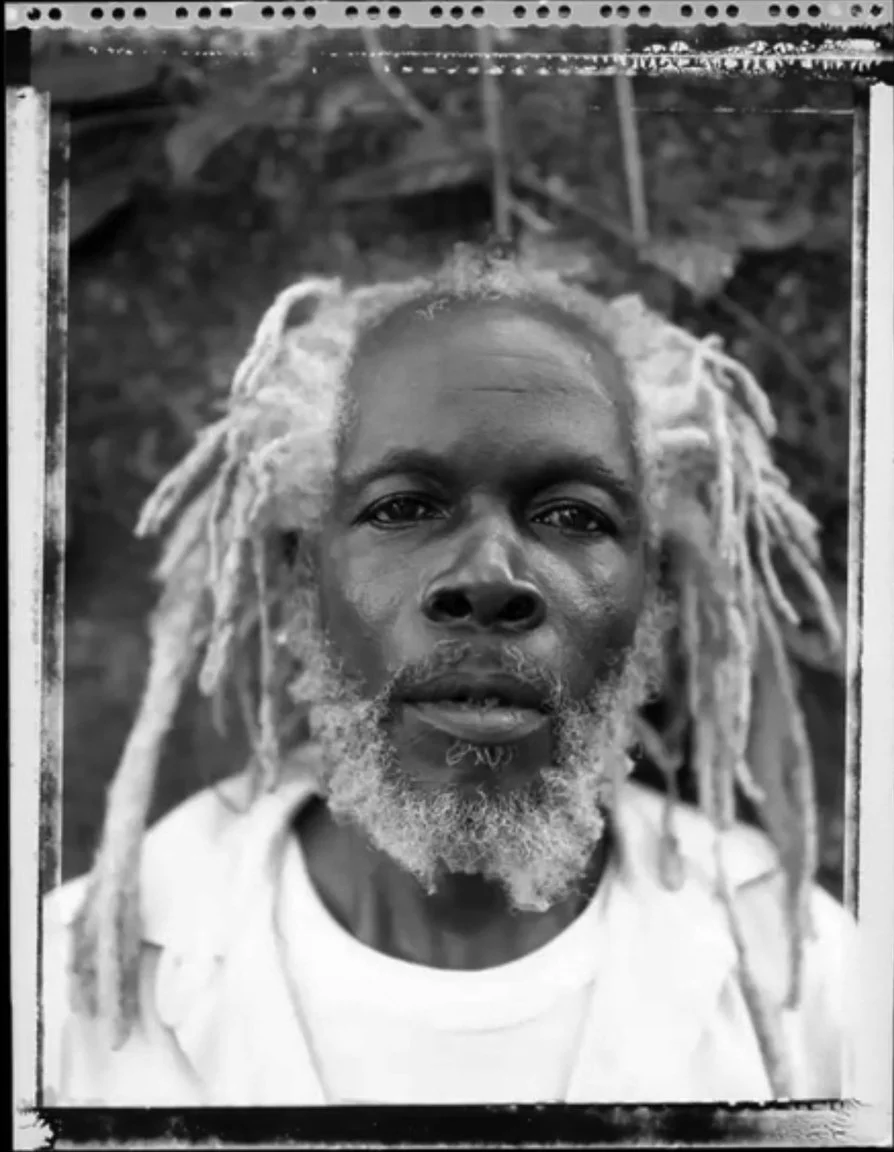
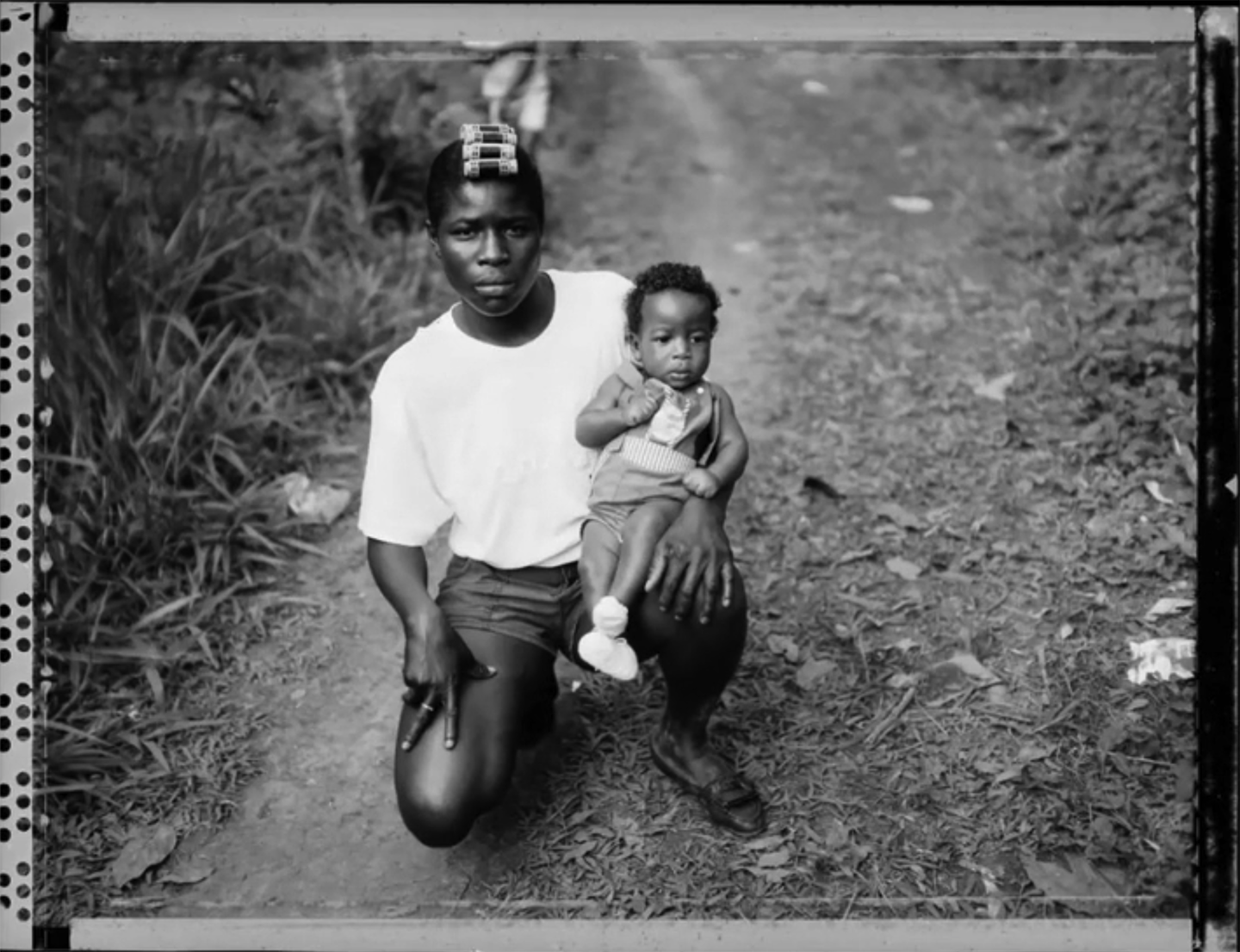
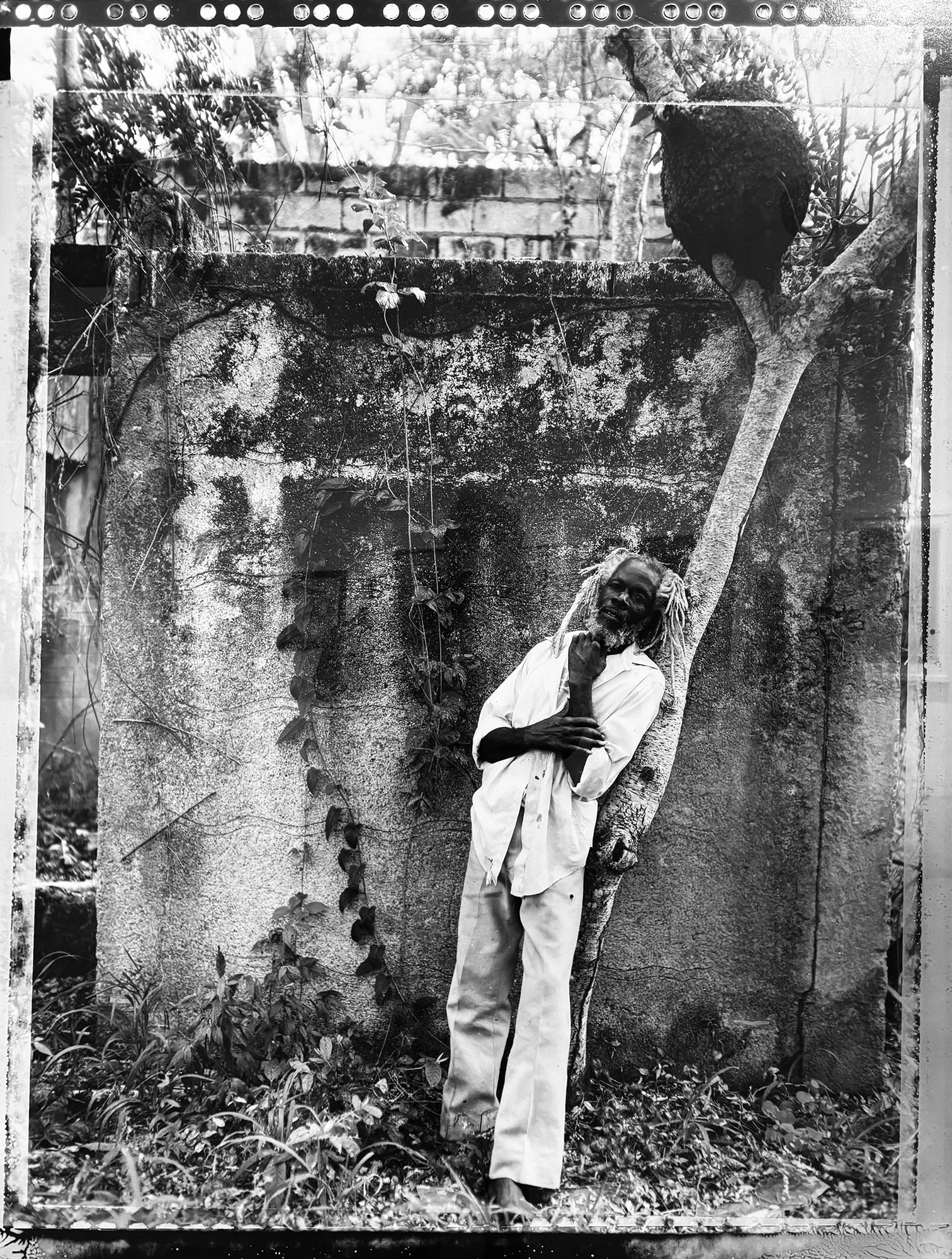
Above (L-R): Joe, Jamaica, 1994; Pinion (Cindy and Child), 1995/2024; Joe Beneath the Termite Nest, 1994. Gelatin silver prints.
RJ: I’d like to begin with a couple of questions about your home country of Jamaica. In your Denver Art Museum talk, I think, you mentioned an arts award you won there as a student in high school.
AC: Well, every August Jamaica celebrates its Independence, and a highlight of the celebration is the Festival of the Arts. To go along with music they have dance, maybe some theater, and the visual arts, including photography. And so when I was in high school and part of the camera club, we all talked about winning the festival prize in photography. I did get a silver and bronze medal [for] second and third place. I actually still have my medals. It was a moment when I saw there might be a future to this photography thing.
RJ: What kind of images had you entered?
AC: Actually a few pictures were landscapes, and some pictures taken at a Broadway show in New York. I had a Green Card in 75 [and] I used to go back and forth.
RJ: Your current shows at the Emmanuel Gallery and East Window include some striking black-and-white Polaroid portraits (above) you made in Jamaica that I like a lot.
AC: That body of work was what, 1995? I applied for a grant and Polaroid kicked in some money as well as film. The one [in the Emmanuel show] of Joe leaning up against a tree was printed from the negative. I asked the people to pose themselves for posterity. I said to them, Imagine somebody looking at this picture twenty, thirty years from now; you've become part of history, [show me] how you’d want to be seen.
RJ: You relocated to the States permanently in 1977. Did you go straight into the School of Visual Arts?
AC: I didn't start at Visual Arts till January of 78. SVA was all about street photography. Everybody wanted to be Garry Winogrand.
RJ: Oh really? Not Roy DeCarava.
AC: They didn't know who Roy DeCarava was back then. He was at Hunter College and so people like Dawoud [Bey] and Jules Allen, and other black photographers studied under him at Hunter. Dawoud was also at SVA, but he was only there for a year or two; he didn't graduate.
RJ: How did you make that transition from street photography to the I-Traits—to a completely different way of working?
AC: Funny enough, I remember the moment when I had this conversation about it. I was on the fifth floor of the 21st Street SVA building in the film developing room and it was me and Lorna [Simpson]. She was like a year behind me. She was a street photographer as well. And I said to her, "I can't keep doing this. You can't tell one person's work from the other. How is that meaningful?” And so I remember saying to her that I'm going inside—meaning in the studio, inside my head. And she ultimately did the same sort of thing later on.
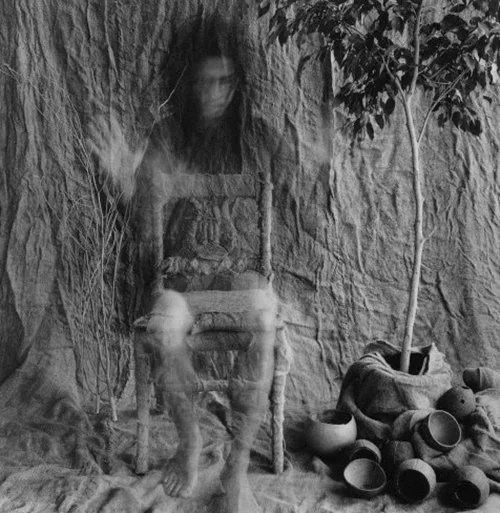
Albert Chong: Natural Mystic, Heralding Image of the I-Traits series, 1980.
RJ: When did you first meet Deborah Willis?
AC: That was around 1980, 81. I had a friend named Wayne Providence who was in a show at the Studio Museum in Harlem at the time. Wayne was a Black photographer doing abstract photography about jazz music, and he was in a thesis seminar class with me at SVA taught by Jan Grover. My self-portrait work was just starting out [and] Wayne said, “You should go call this guy at the Studio Museum, make an appointment, go see [museum curator] Danny Dawson. Danny looked at my work and he said to me, “Oh, I wish I had known about your work. I would've put you in this exhibition. Let me call somebody.” And he got on the phone and called Deborah Willis, who was ten blocks away at 515 Malcolm X Blvd, at the Schomburg Center for Research in Black Culture. So I went to see Deb and she loved the work as well. And that's sort of how it started. She then connected me with the whole Black photography movement in New York at the time, started putting me in shows.
RJ: Those are amazing connections for a young artist to have.
AC: There was also Kellie Jones at the Jamaica Arts Center in Queens, NY, and Robert Lee at the Asian American Arts Center in Chinatown. He became a huge champion of the work as well. I guess, you know, I really appreciated it because it wasn't just politics. They saw something in the work and thought it was important. Even if it didn't quite work out the way we all hoped it would. I didn't believe in a lot of postmodernism. I felt that it was sort of like anti-art. That was a sure formula to success in the '80s. Just put text in your work, and you would have been a big star. I knew that. A lot of us knew that, but I just couldn't do it.
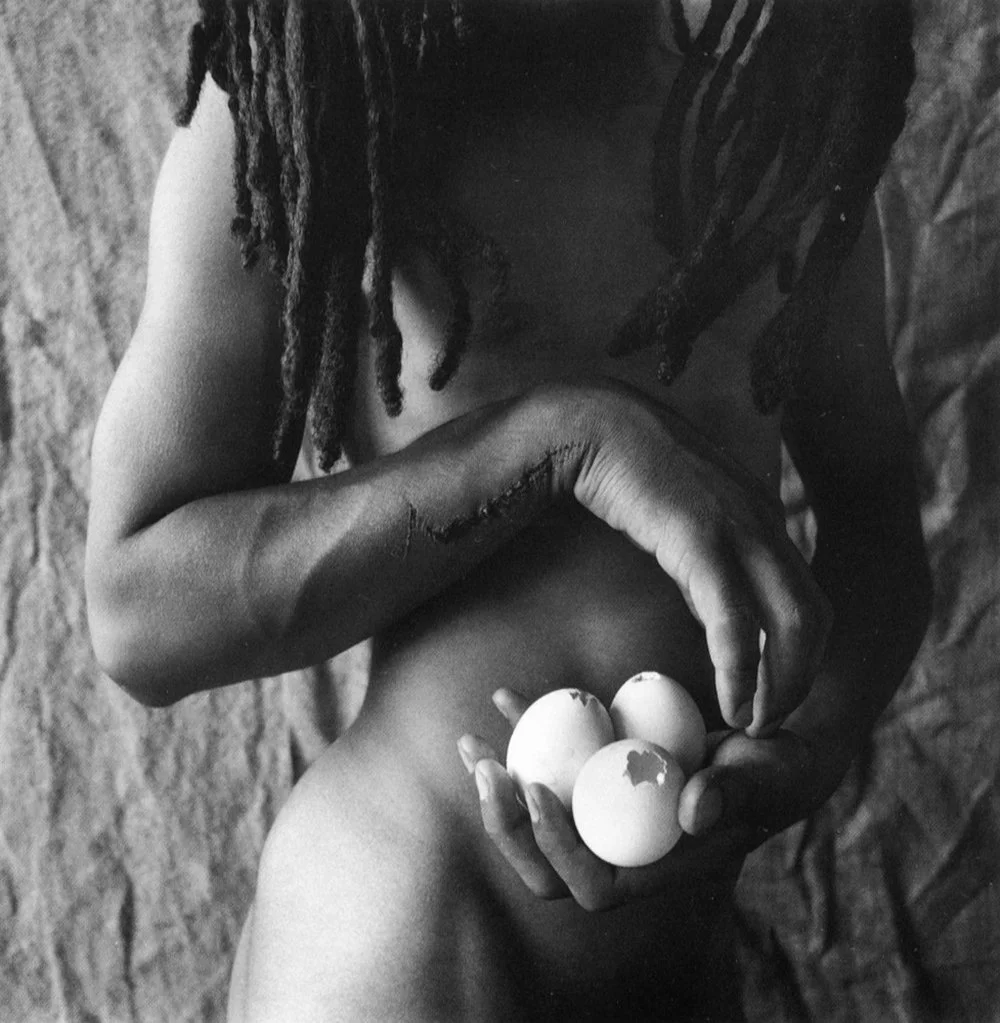
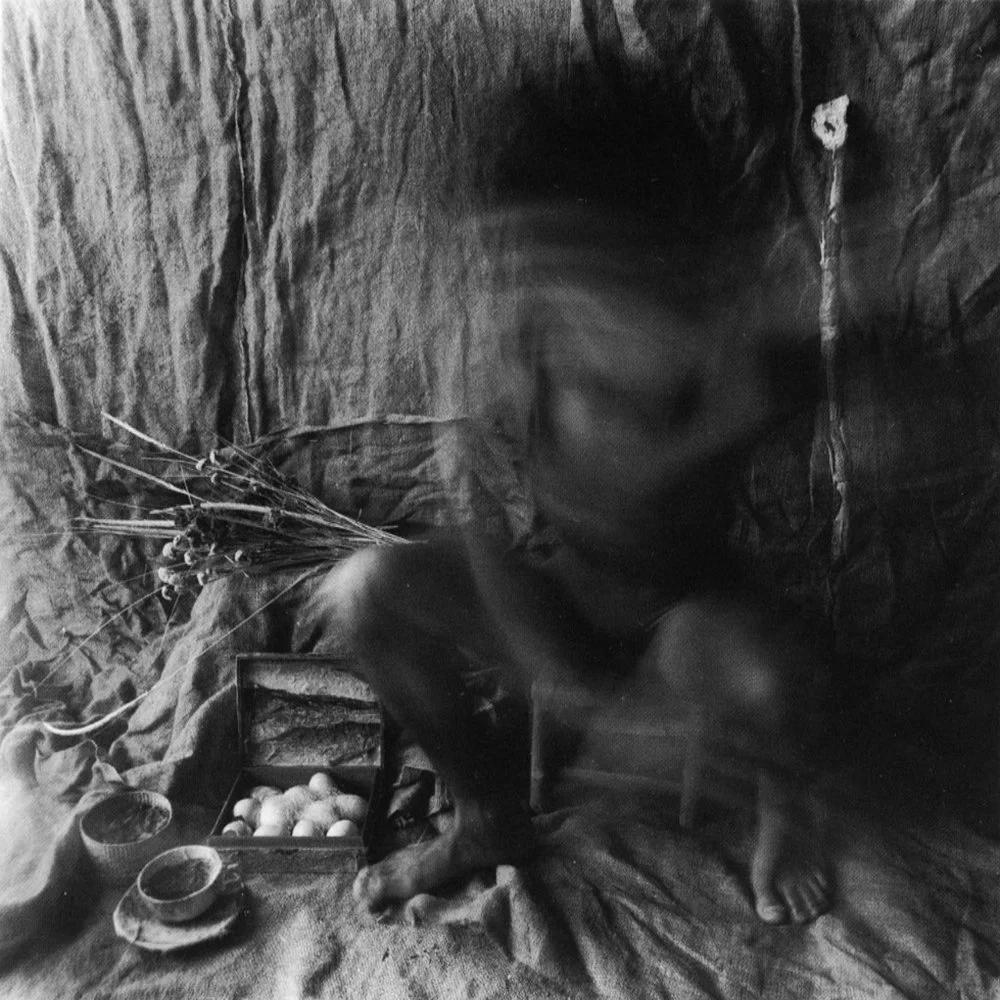
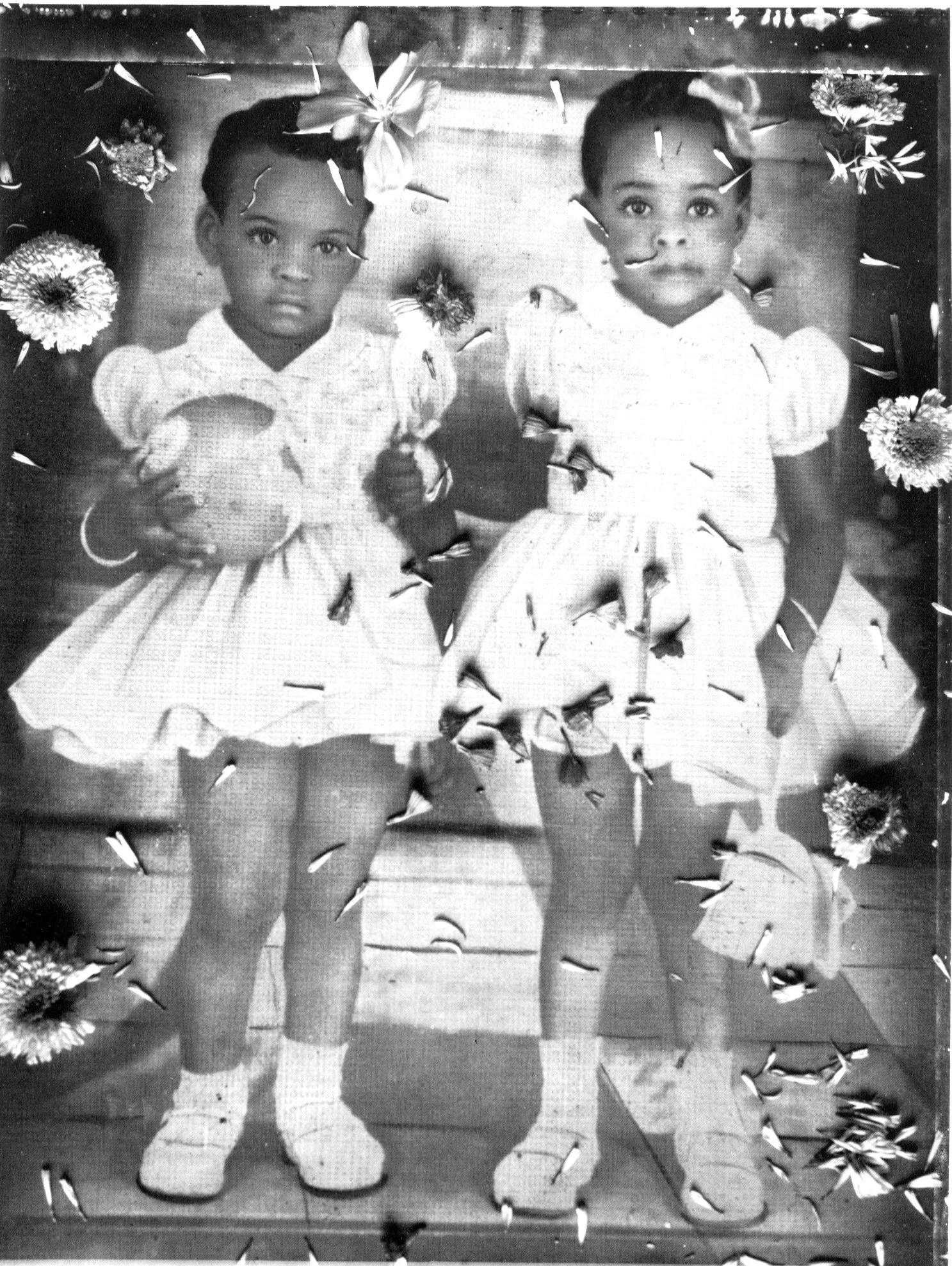
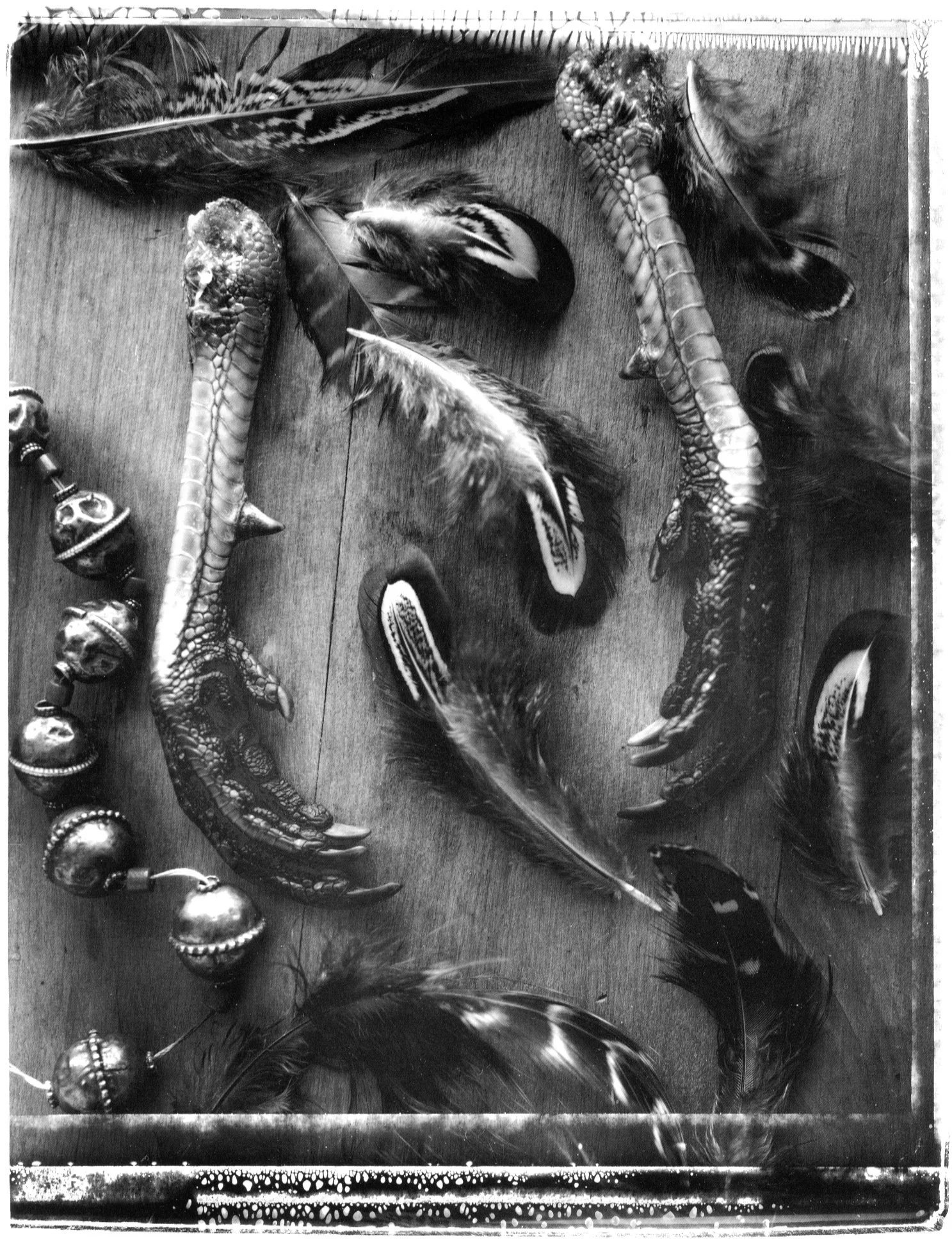
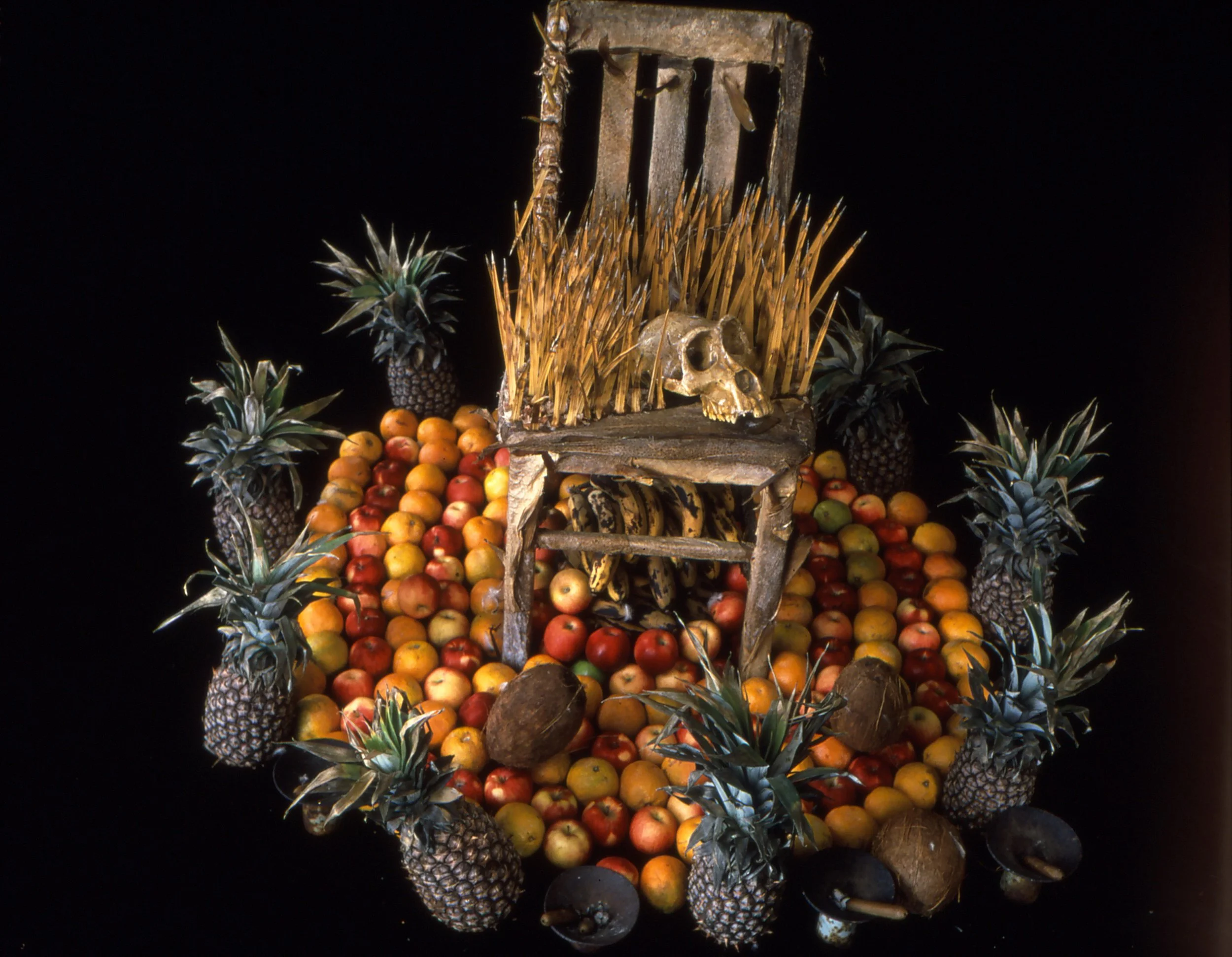
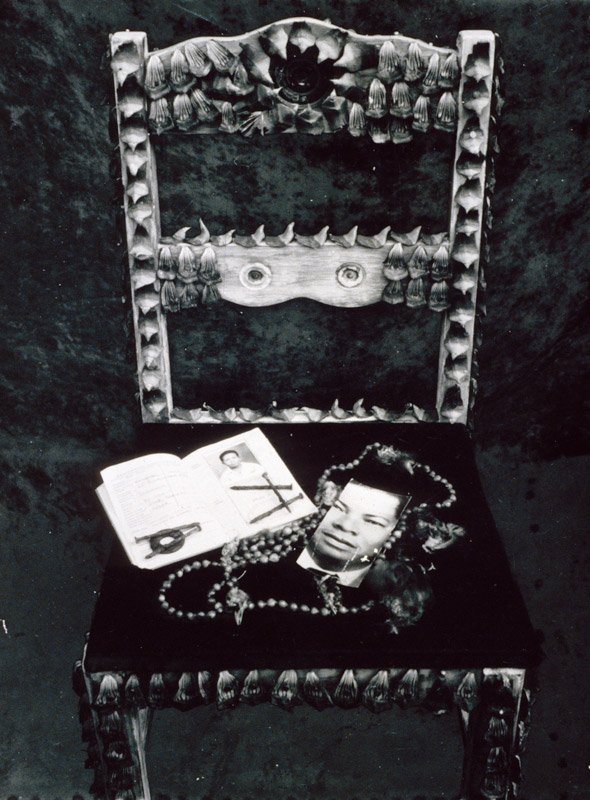
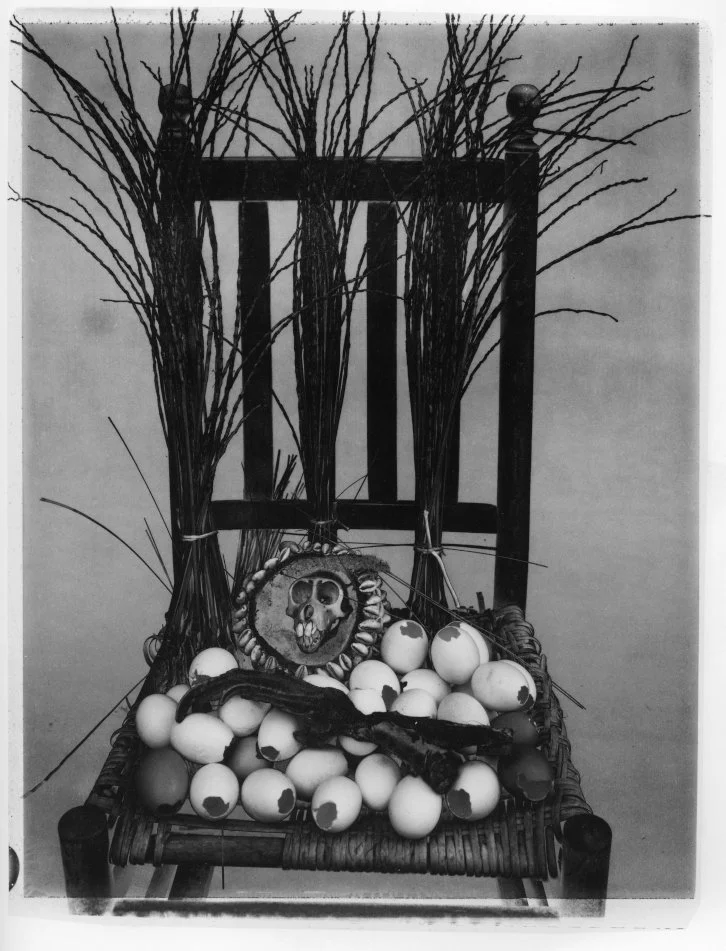
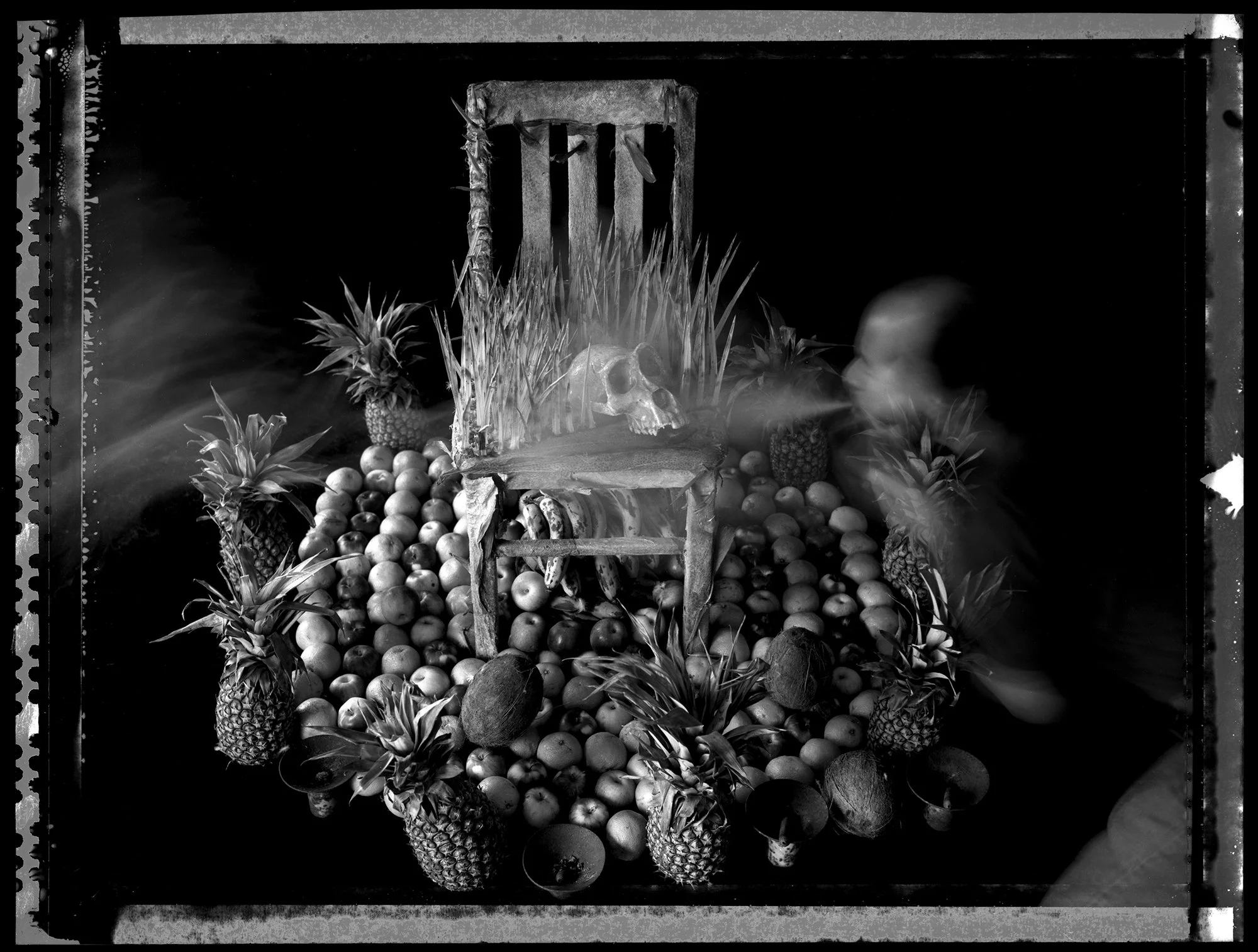
Above: Albert Chong, Top L-R: Self Portrait with Eggs, 1985; Anointing the Eggs, 1982-85; The Two Sisters, 1986; Obeah, 1987. Bottom: L-R: Throne for Gorilla Spirits, 1993; The Two Generations, 1990; Throne for the Keeper of the Boneyard, 1991; Blessing the Throne, 1993.
RJ: Even though you were being championed by those influential artists and curators, you, your wife and son, and infant daughter left New York and settled in California and enrolled in the UC San Diego graduate art program. By the time you joined the photo faculty at CU Boulder you had earned an MFA (1991) and were making your Thrones series.
AC: Thrones was done for part of my thesis. Things were just flowing back then. Deb Willis was curating all these exhibitions to promote African American photography, and one of her exhibitions had been traveling—I think it might have been The Constructed Image, could have been Convergence, there were a number of them. Also, I was in a show at MoMA in '91.
RJ: What was that called?
AC: The Pleasures and Terrors of Domestic Comfort. They chose one image of mine, of the sisters, that became associated with the exhibition and all the reviews and whatnot. That was the first time I met Carrie [Mae Weems] actually, back in '91.
RJ: That's interesting, because she went to UC San Diego, as well, didn't she?
AC: Yes, she was there with Lorna a few years before me. In fact, that was the reason why I ended up in San Diego, is because of Lorna.
RJ: How did you come to be in Boulder?
AC: One of the big advocates for my being here was Lucy Lippard. Lucy was here, and she knew about me. She was with me the whole time, in the interview, she was in the audience, she's the one who walked me out after the talk. I remember her saying to me, “Albert, I don't know how that went, because I'm really scared now, because I didn't know you were going to talk about smoking weed. Having weed in your photos. I don't know how they're going to take that.” I said, “All right Lucy, they've got to know who they're getting. I am not going to hide who I am to take a job. This is part of the work, for better for worse.”
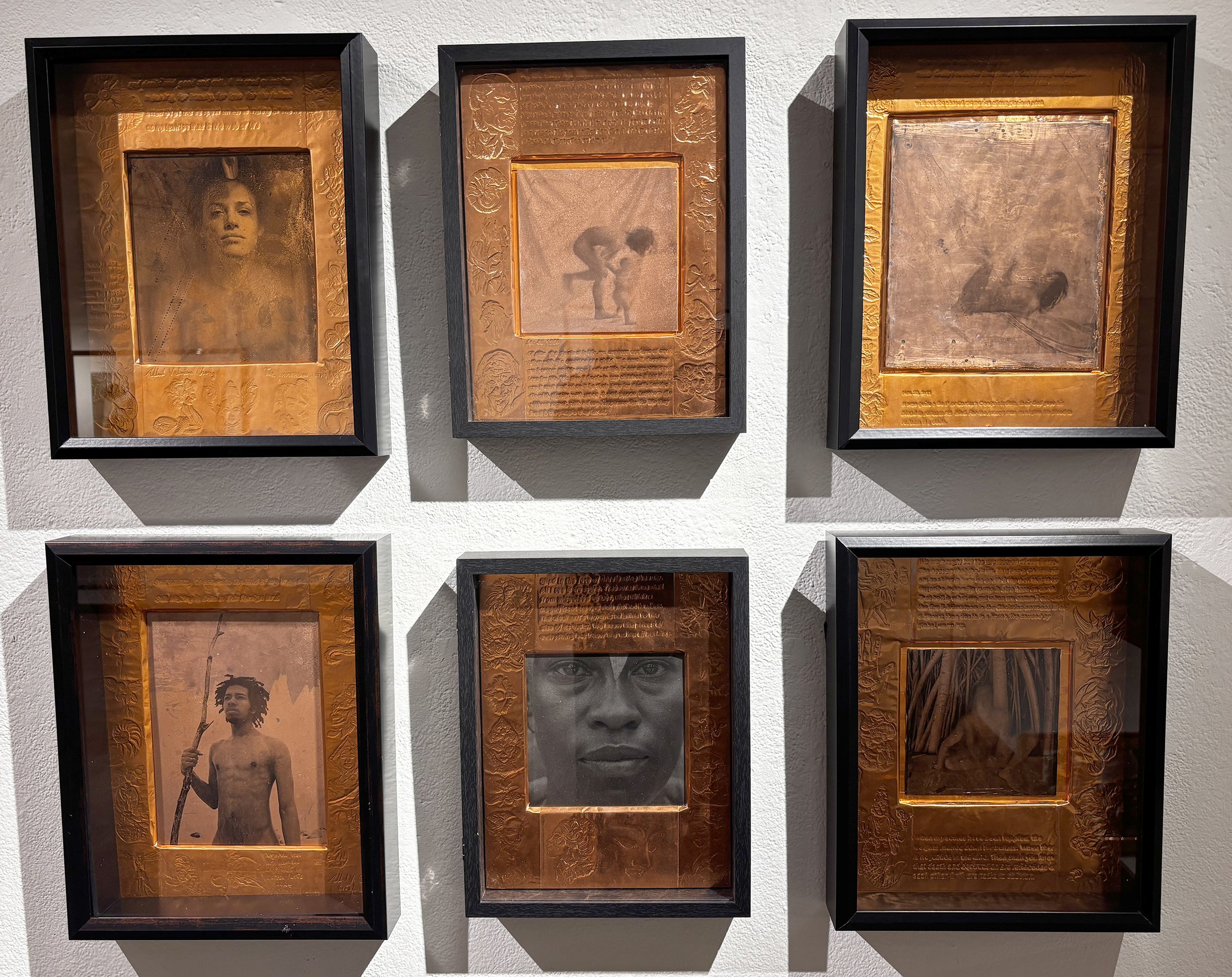
Albert Chong: Six image transfers installed at the Emmanuel Gallery, Denver, 2026. Top L-R: The Immersion, 2024. Waterslide transfer on copper plate with inscribed copper mat; Learning to Walk, 1982/2025. Waterslide transfer on 6 x 6 copper plate with inscribed copper mat; Apparition, 2025. Image transfer on copper plate with debossed inscribed copper mat. Bottom L-R: Nyahman, 2024. Waterslide decal transfer on copper plate inscribed copper mat; Charmaine, 2025. Waterslide transfer on 6 x 6 copper plate with inscribed copper mat; The Arms of Vishnu, 2025. Insrcibed transfer on copper plate with inscribed copper mat.
RJ: At what point did the copper framing come into the work?
AC: It started in San Diego. Our studios were cubicles in a big space, so we had one common roof. I had all these studio-mates, and one was a sculptor, Lesley Samuels. She was working with copper and she gave me a piece. While I was there, I had to take a phone call or something, and I was writing on an envelope, and that envelope was sitting on top of the copper sheet. After I'd written, I saw the imprint, and I realize, "That's actually kind of cool." So that's how that started.
RJ: Even though people in your circle like Lorna Simpson are known as postmodernists, postmodernism is a movement that as an artist you’ve never personally embraced. Why is that?
AC: I tend to call myself an artist who uses photography, but I also love photography and love it for its own virtues, its own qualities. Lorna saw herself as more of a conceptualist. She got into it for the idea of messaging; I got into it because I love images. I love beautiful images. That's generally the distinction between photographers and artists who use photography. I tend to want to be both.
END
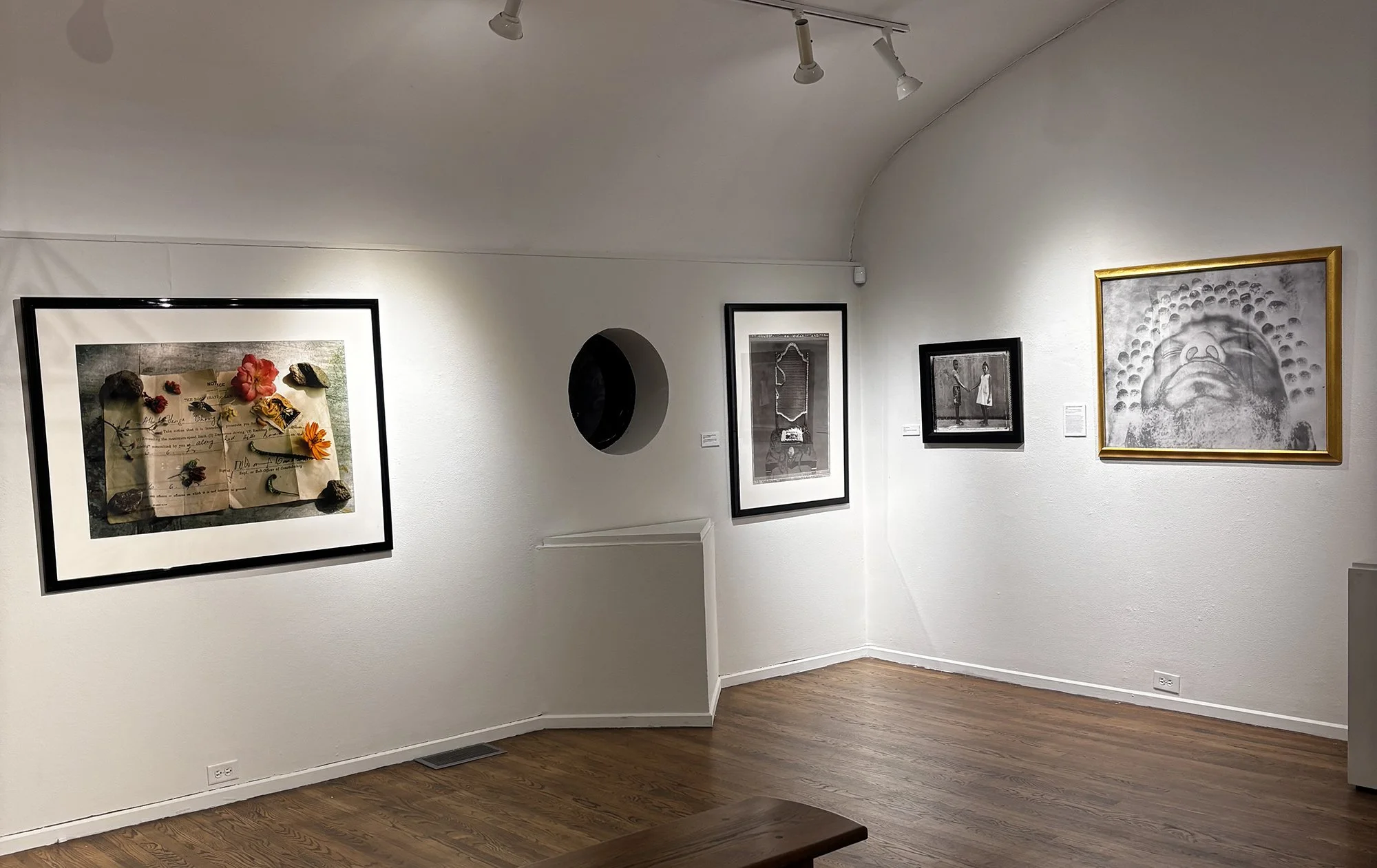
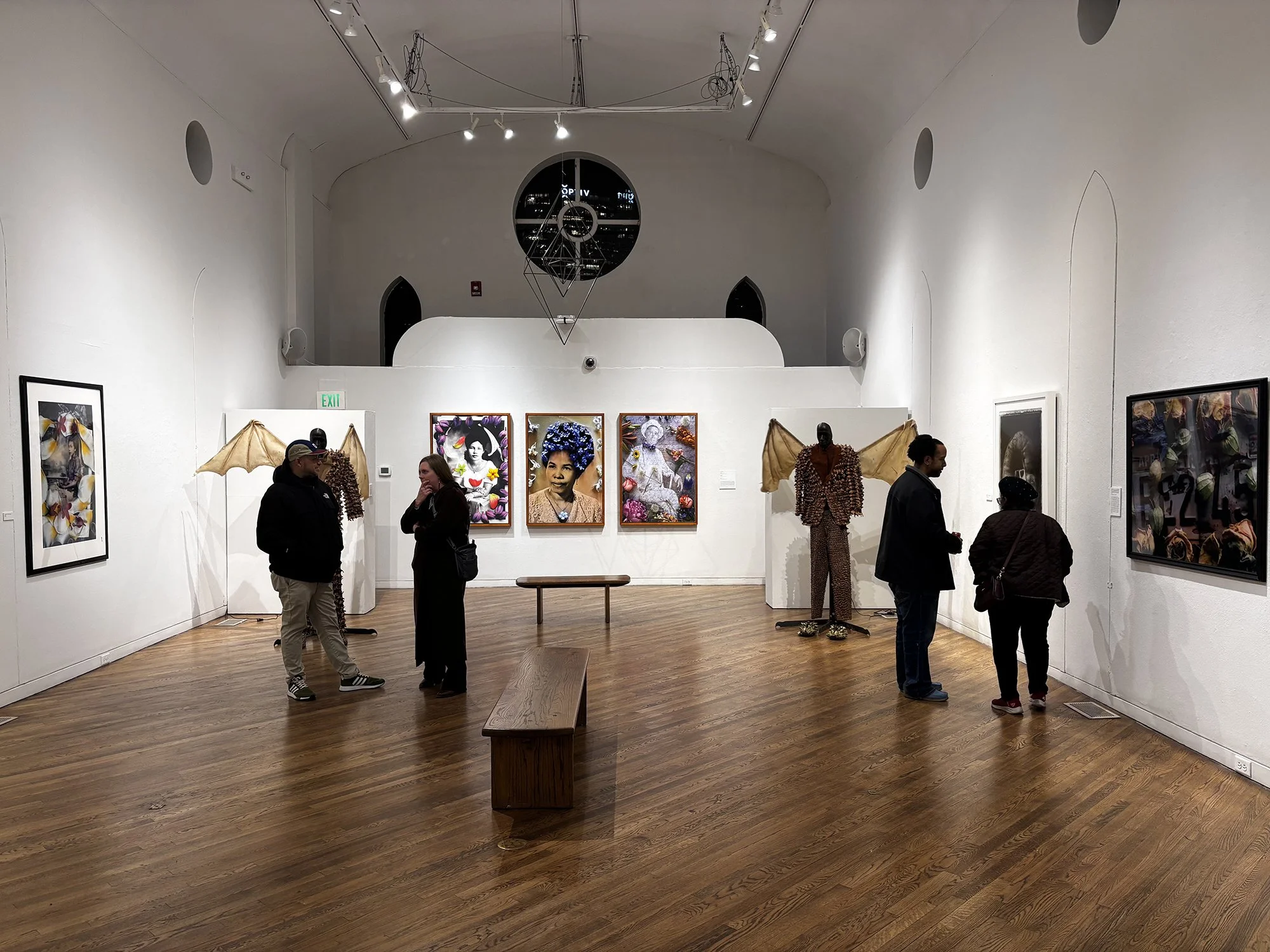
Installation at the Emmanuel Gallery, Denver 2026.